“If that’s the biggest mistake you make today, you’re ahead of the game.”
I say this to clients at least once a week.
Their days are relentless. Back-to-back meetings, high-stakes decisions, constant pivots — they fall short of their own expectations. And I remind them to keep perspective.
But I don’t always offer myself the same grace.
Just last week, in my enthusiasm to be of service, I ended a meeting with an unsolicited opinion. It wasn’t a major misstep, but I replayed it for hours.
I know better. And still, I forget. It’s humbling.
From a young age, I was affirmed for getting it right — and that still feels good, albeit briefly. Real growth, though, has come from accepting feedback, not outrunning mistakes.
Yet, I sometimes resist admitting mistakes. I worry about losing credibility. My ego flares. It stings.
I see this in myself and clients. Lately, I’ve been asking: What am I really afraid of losing when I make a mistake? Is my attachment to credibility just a subtler form of addiction to being right? A way to feel safe, accepted, in control?
At its root, I think it has to do with belonging — with wanting to be trusted and valued.
But here’s the thing: without credibility, how effective can I really be?
The value I bring isn’t about having the right answers. It’s helping mission-driven leaders navigate complexity, adapt to unpredictability, and hold space for what’s emerging.
On reflection, this kind of work means letting go of the illusion that we “should” know. Because more often than not, we don’t.
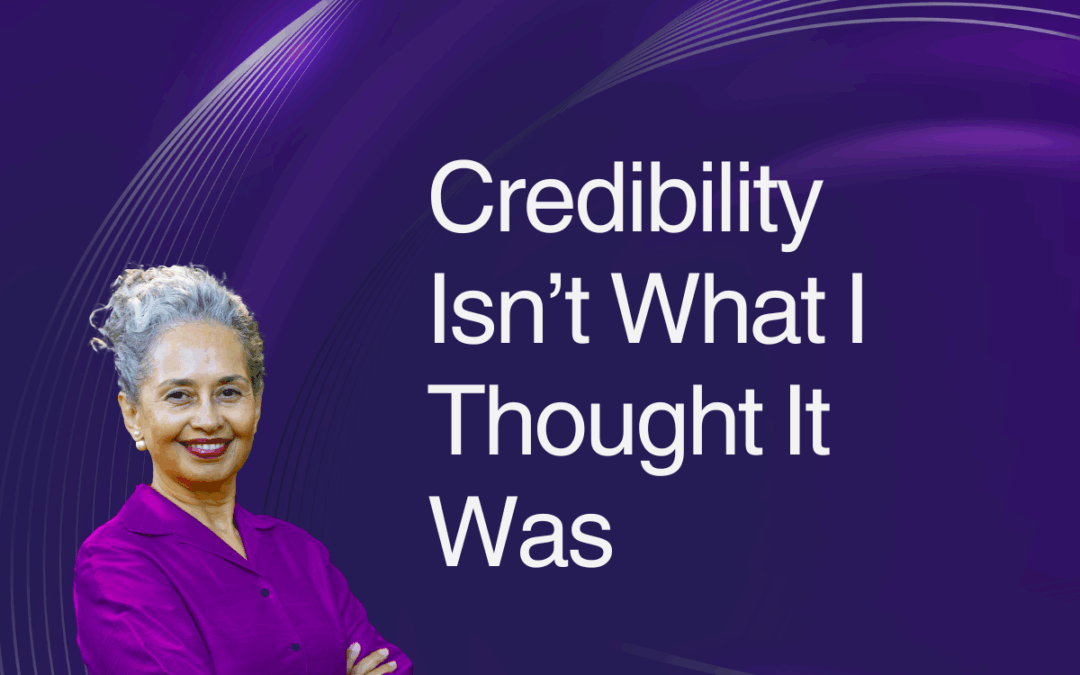
So, if credibility doesn’t come from certainty, expertise, or having it all figured out, where does it come from?
Recently, it dawned on me that my true credibility is earned through my relationship to truth: a willingness to reveal my own blind spots, contradictions, and learning edges. It’s about being real — especially about what I don’t know — and holding a fierce commitment to grow.
That kind of credibility builds trust. Not the kind built on titles, but the kind that says:
You can borrow my clarity until yours returns.
You can evolve.
You don’t have to know everything.
This credibility gives me permission to challenge and support. To guide without pretending I’ve walked this exact path before.
It feels quieter. Less performative. More real and more aligned with right action.
So, have I learnt from my habit of tying credibility to being right?
Not entirely. But I’m paying attention. I’m learning to anchor it in clearer presence.
We all have our own relationship with credibility.
Where is yours evolving?